 Photo: Diego Delso · CC BY-SA 4.0 · resized for web
 Uganda
Uganda combines forest trekking, lakes, wetlands, mountains and savannah. Its most rewarding journeys follow the geography rather than treating every protected area as an isolated tick on a list. Entebbe and Lake Victoria provide a natural starting point; from there,…
At a glance
Useful facts for planning
In this guide
Why go
Discover Uganda
Uganda combines forest trekking, lakes, wetlands, mountains and savannah. Its most rewarding journeys follow the geography rather than treating every protected area as an isolated tick on a list. Entebbe and Lake Victoria provide a natural starting point; from there, routes can move north toward Murchison Falls or west through Kibale, Queen Elizabeth and the Bwindi region.
Landscapes and experiences
Gorilla trekking requires a confirmed permit and careful matching of the assigned Bwindi sector or Mgahinga trailhead with accommodation. Forest paths can be steep and muddy, and wildlife encounters remain subject to animal movement and ranger direction. Kibale offers a separate primate setting, while Bigodi adds a locally guided wetland perspective near the forest edge.
Queen Elizabeth National Park holds several different experiences. The Kazinga Channel changes the view from vehicle to water; Ishasha’s southern landscape is useful on a route toward Bwindi; Kyambura Gorge brings a forest walk into a predominantly open-country journey. These places should be given their own time rather than described as interchangeable safari stops.
Murchison Falls, Lake Mburo, the Rwenzori, Lake Bunyonyi and the Kisoro lakes each change the journey’s pace. A mountain trek demands different preparation from a gentle lake stay. Mabamba Bay and other wetlands reward birders who can accept that water levels and sightings vary.
Planning the journey
Driving conditions and distances influence what fits into a day. Book permits and specialist guiding early, confirm current park rules, and keep room in the schedule for rest after long transfers. Community visits should be arranged with local partners and approached as conversations, with consent for photographs.
Explore the destination guides
These guides help match the route to your interests, available time and the season. Each place has its own character and practical considerations.
Bigodi Wetland Sanctuary
A community-linked wetland experience near Kibale where forest edge, papyrus and village landscapes support monkeys, birds and butterflies. It is an excellent complement to chimpanzee tracking because it broadens the stay and directs tourism benefit into the surrounding community. Bigodi provides a gentler counterpoint to the intensity of chimpanzee tracking. Boardwalks and village-edge paths move through papyrus, forest fringe, farmland and swamp, creating a place where smaller wildlife and everyday rural life become the focus.
Bwindi Impenetrable National Park
Bwindi is a UNESCO World Heritage rainforest and Uganda’s best-known mountain-gorilla destination. The experience is not only the hour with a habituated gorilla family; it is the entire journey through steep forest, village landscapes, conservation systems and community life. Dense Afromontane forest covers steep ridges and valleys in southwestern Uganda. Trails can be muddy, uneven and physically demanding, with conditions changing quickly.
Bwindi Trekking Sectors: Buhoma, Ruhija, Rushaga & Nkuringo
Bwindi is not one single trekking base. The four principal sectors require different road approaches, lodge choices and onward routing. Permit sector should therefore determine accommodation: southern sectors pair well with Kisoro, Lake Mutanda and Kigali via Cyanika, while Buhoma and Ruhija often connect more naturally with Queen Elizabeth and central Uganda routes. Bwindi should never be treated as one interchangeable pin on a map. Its trekking sectors sit around different edges of a mountainous forest and create very different approaches, lodge choices, transfer times and onward connections.
Entebbe & Lake Victoria
Entebbe is far more useful than an airport overnight. Its lakeside setting, botanical gardens, access to Mabamba and comparatively calm pace make it a sensible opening or closing chapter for Uganda safaris. The town occupies a green peninsula extending into Lake Victoria, with mature vegetation, wetlands and broad water views.
Ishasha Sector
The southern sector of Queen Elizabeth National Park is quieter, more remote and strategically positioned on the road toward Bwindi. It is associated with tree-climbing lions, though sightings are never guaranteed, and its open fig-tree landscapes deserve an overnight rather than a rushed transit stop when time allows. Ishasha feels markedly quieter and more spacious than the busier northern areas of Queen Elizabeth. Fig-dotted plains, woodland and seasonal drainage lines create a slow safari landscape that is ideally placed between the park’s central sector and Bwindi.
Kazinga Channel
The natural channel linking Lakes George and Edward is one of Queen Elizabeth National Park’s defining experiences. Boat safaris can reveal dense concentrations of hippos, buffalo, elephants, crocodiles and waterbirds along the banks, giving a low, water-level perspective that complements game drives. The Kazinga Channel is one of Uganda’s great safari waterways, joining Lakes George and Edward through the heart of Queen Elizabeth National Park. A boat journey changes the park from a road-based safari into a close study of shoreline ecology, with animals, birds and fishing activity compressed along the water’s edge.
Kibale National Park
Kibale is one of East Africa’s most celebrated primate destinations. Tall tropical forest, swamp, grassland and community-managed landscapes support a remarkable concentration of primates, with chimpanzee tracking at the heart of most visits. The forest rises over undulating terrain in western Uganda, with nearby crater lakes, tea landscapes and rural communities adding variety to longer stays.
Kyambura Gorge
A forested gorge cut into the wider savannah of Queen Elizabeth National Park. Guided primate and nature activities, where currently operated, reveal a completely different habitat from the surrounding plains and make the park feel ecologically much larger than a standard game-drive destination. Kyambura appears almost suddenly as a green incision through open savannah. Descending toward the forest creates a dramatic ecological transition from sunlit grassland to humid riverine vegetation, birds, primates and a much more enclosed world.
Lake Bunyonyi
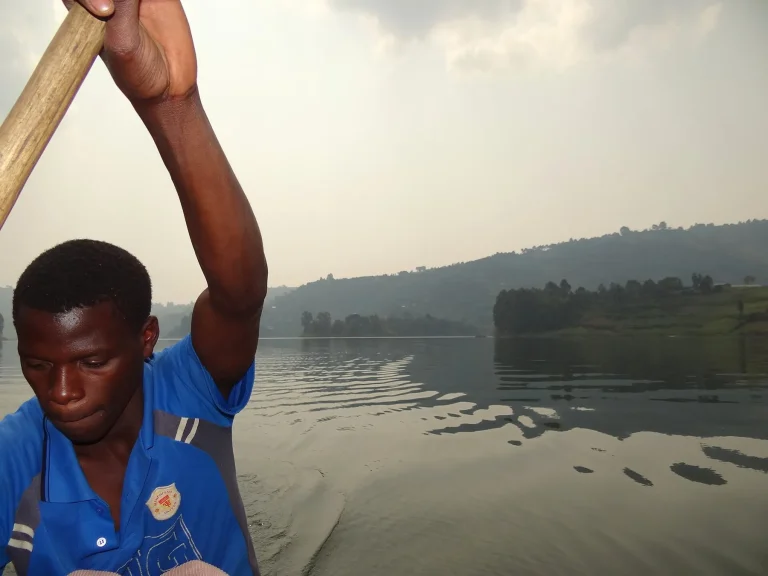
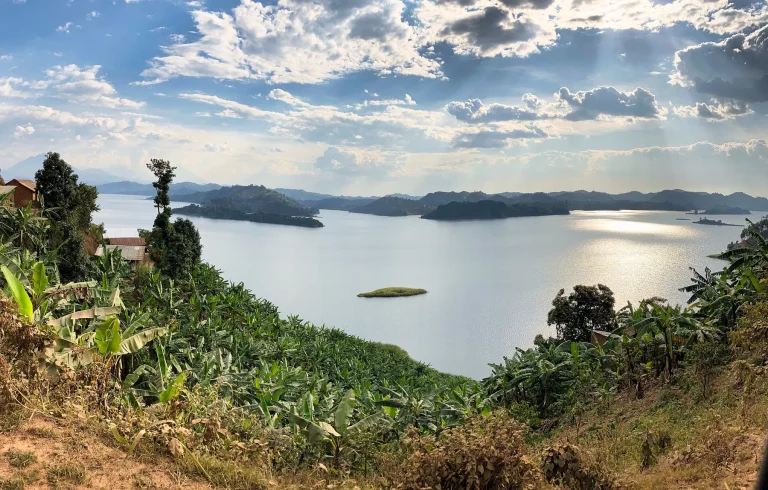
Lake Bunyonyi is a scenic highland lake often used as a restorative stop between safari and gorilla sectors. Its steep terraced hillsides and numerous islands create one of Uganda’s most recognisable rural landscapes. Road from Kabale and southwestern safari routes. Recommended stay: 1–2 nights. The most natural combinations are Bwindi, Lake Mburo and Mgahinga..
Lake Mburo National Park
Lake Mburo is smaller than Uganda’s headline parks but exceptionally useful in circuit design. It breaks the long road between Entebbe and southwestern Uganda and offers walking, game drives, boating and wildlife in an intimate landscape. Rolling acacia woodland, open grassland, rocky ridges, lakes and wetlands produce a softer, more enclosed safari environment than the broad plains of Queen Elizabeth.
Lake Mutanda & Kisoro
Lake Mutanda and nearby Kisoro form a compelling soft-adventure gateway in southwestern Uganda. The lake is framed by steep green hills and distant volcanic peaks, while Kisoro provides practical access to Mgahinga and southern Bwindi. Domestic flights to Kisoro or road from Kigali/Kabale/Bwindi. Recommended stay: 1–2 nights, often integrated with a gorilla lodge stay. The most natural combinations are Bwindi and Mgahinga..
Mabamba Bay Wetland
Mabamba is one of the most practical wetland additions to an Entebbe stay. The experience is a slow canoe journey through papyrus channels in search of the extraordinary shoebill and other wetland birds. Road/boat excursion from Entebbe depending on routing. Recommended stay: Half-day excursion. The most natural combinations are Entebbe and Lake Victoria..
Mgahinga Gorilla National Park
Mgahinga protects Uganda’s share of the Virunga volcanic landscape. It is particularly valuable for golden-monkey tracking, mountain hiking and as an alternative gorilla destination within a dramatic high-altitude setting. Near Kisoro in southwestern Uganda. Recommended stay: 2–3 nights. The most natural combinations are Lake Mutanda, Bwindi and Rwanda’s Volcanoes National Park..
Murchison Falls National Park
Murchison combines classic savannah wildlife with one of East Africa’s great river spectacles. The Victoria Nile cuts through the park before forcing itself through a narrow gorge at Murchison Falls and continuing toward Lake Albert. North-bank grasslands, Borassus palms, woodland, riverine vegetation and the Nile create strong visual contrast.
Queen Elizabeth National Park
Queen Elizabeth National Park is exceptionally diverse in both scenery and experience. It links open savannah, crater landscapes, the Kazinga Channel, forested gorges and the remote Ishasha sector within one broad protected area. The park sits in the Albertine Rift between lakes Edward and George, with the Rwenzori Mountains often forming a dramatic distant backdrop.
Rwenzori Mountains National Park
The Rwenzori range is one of Africa’s great trekking landscapes. Unlike freestanding volcanic peaks, the Rwenzoris form a complex mountain chain of deep valleys, bogs, lakes and high summits, culminating at Margherita Peak on Mount Stanley. Trails climb from montane forest through bamboo, heather, giant lobelia and groundsel zones into rock, ice and glacier terrain.
Ziwa Rhino Sanctuary
Ziwa is commonly used as an en-route conservation stop between central Uganda and Murchison Falls. Guided tracking on foot provides a very different encounter from vehicle-based game viewing. Woodland, grassland and bush create a managed sanctuary landscape where rhino monitoring and visitor access are closely controlled.
Gallery
A sense of place